This week, we are launching the 2026 Xylem Innovation Challenge on critical minerals and energy recovery, creating a pathway for startups to pilot with Xylem. Read on to learn more.
We’ve reached an interesting moment for water tech. We are seeing a collision of several forces from supply chain risk, energy volatility, resource scarcity, rising geopolitical tension, and exploding demand tied to powering a growing economy.
Water sits at the center of it all. It underpins households, industry, and the broader economy. This creates a real opportunity for entrepreneurs to develop water technologies that capture economic value, reduce pressure on our systems, and enhance planetary health in the process.
As we explored this opportunity with the Xylem team, two areas stood out as ripe for the entrepreneurial taking: critical mineral supply and energy resilience.
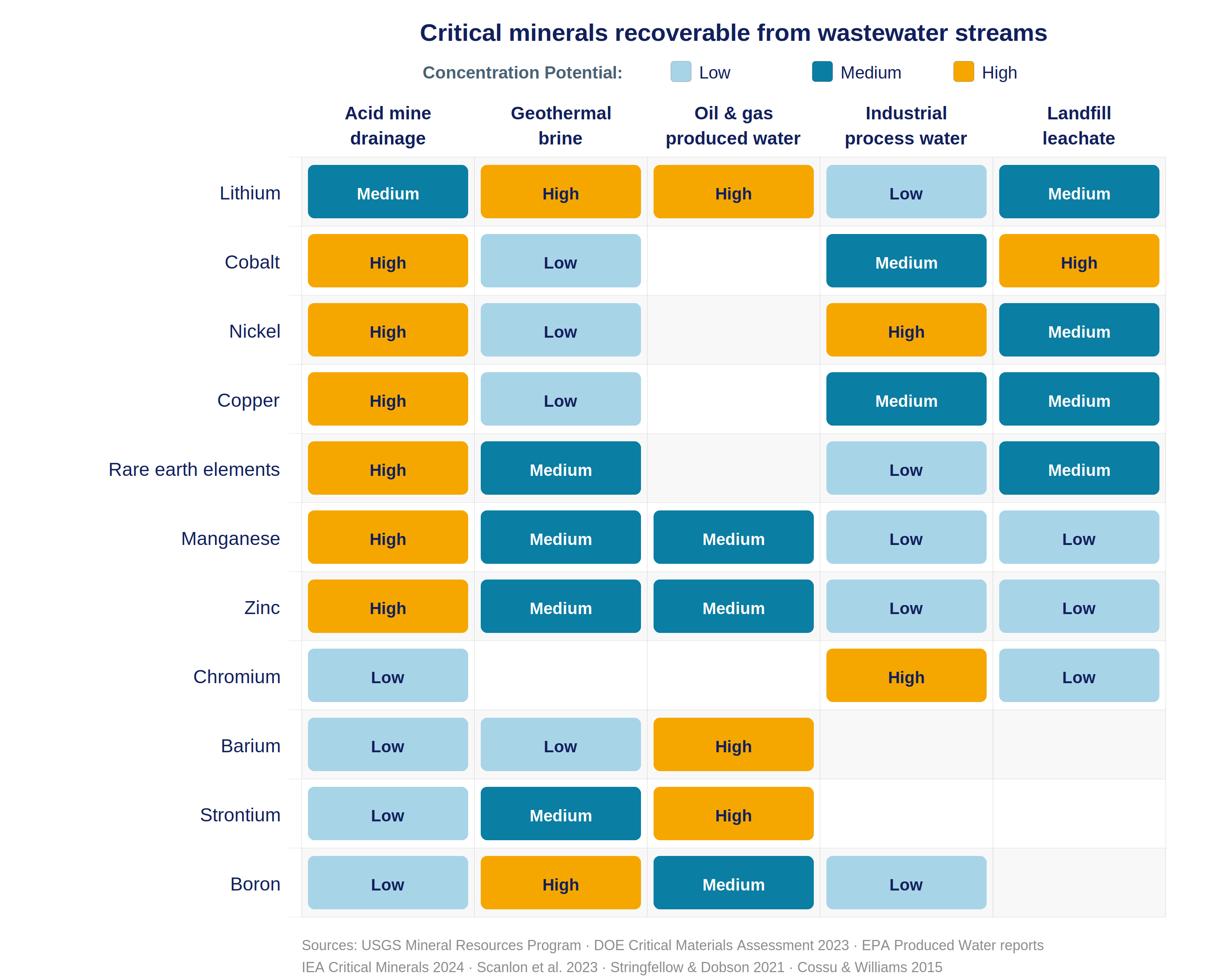
Powering the AI economy and emerging industries increasingly comes down to physical materials and infrastructure. Chips, batteries, and electrified systems all depend on critical minerals, and a surprising amount of those materials may already exist in waste streams we are actively managing.
The U.S. oil and gas industry generates more than one trillion gallons of wastewater (produced water) annually, containing an estimated 250,000 tonnes of lithium carbonate, more than half of the projected U.S. supply deficit by 2030. Companies are already moving to capture it: Element3 is standing up a 3,000-tonne facility in Fort Worth, and LibertyStream with Select Water has a 1,000-tonne project underway in Howard County, Texas.
Produced water is one example. Similar opportunities exist across brines, acid mine drainage, and other industrial waste streams where valuable minerals are present but never separated out. Recovering them lowers treatment costs, creates secondary revenue, and helps secure a more resilient domestic supply of critical materials.
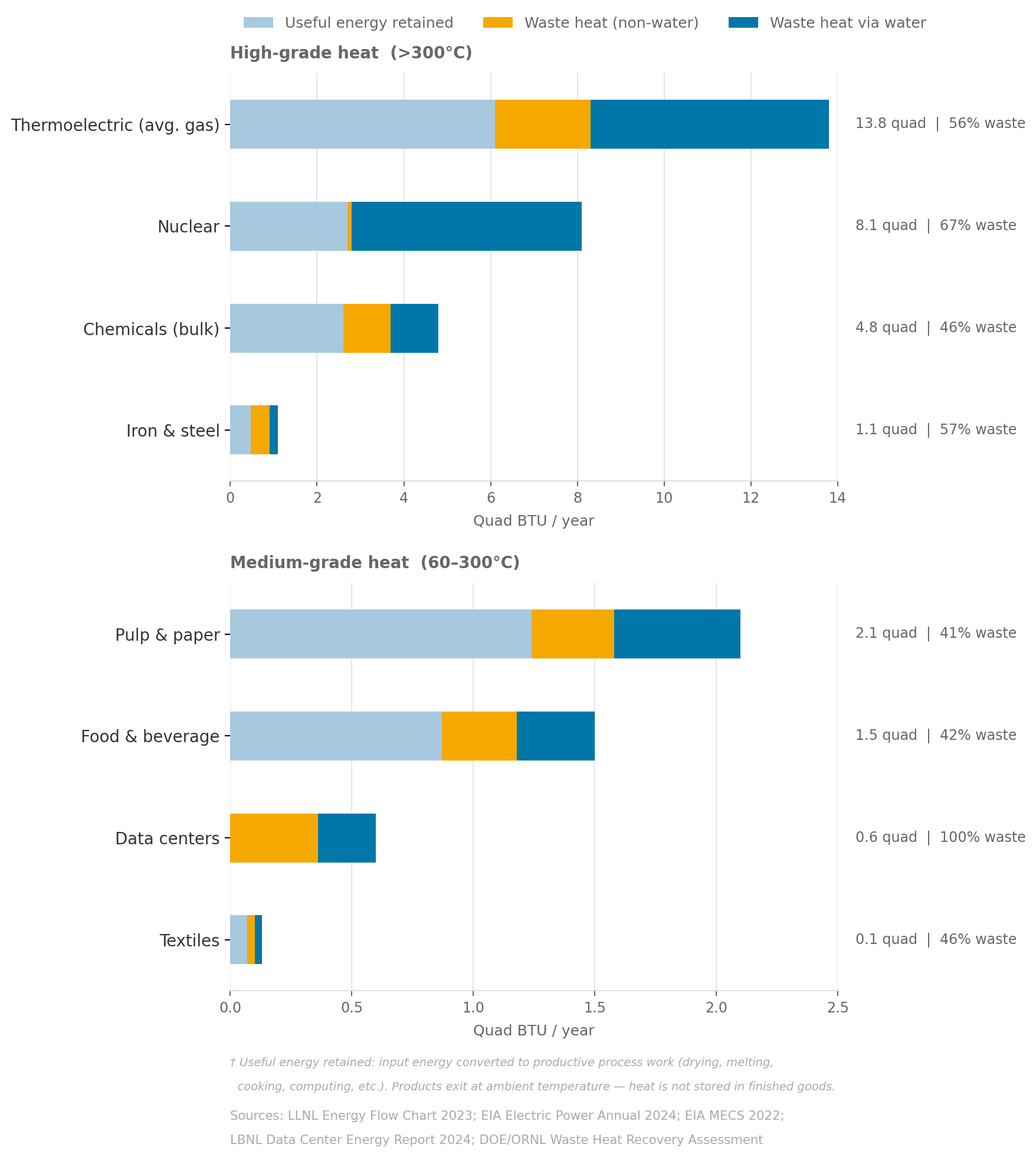
In heat-intensive industrial operations, 30–40% of input energy escapes as waste heat, much of it carried through water systems and discharged unused. Recovery technologies have existed for years, and they're already deployed in numerous industrial settings. But rising energy costs and tightening policy, including the EU's Energy Efficiency Directive, are reopening the conversation across sectors where adoption hasn't moved fast enough.
In industries like pulp and paper, food and beverage, and data centers, energy represents 15–25% of costs, often within businesses operating on already tight margins. These pressures are meaningfully shifting the ROI for recovery technologies.
Recovering energy or minerals from these streams is not new. What may be changing is the moment. There is now stronger market pull for technologies that can prove out their economics in real systems.
We’re on the lookout for startups ready to seize this opportunity.
Xylem is the ideal collaborator on this challenge. Solutions in these areas need to operate reliably within existing infrastructure and scale at a cost customers can adopt. The Innovation Challenge is not just a pilot opportunity, but development with one of the ecosystem’s key technology developers and integrators, together with the ClimateHaven platform.
At ClimateHaven, we work with founders every day, and the companies that succeed are usually the ones that can execute through complexity: working closely with customers, iterating in real environments, and navigating operational and commercial constraints.
We’ve structured the Innovation Challenge as a 2–3 month sprint. Four to six startups will work directly with Xylem’s technical teams and industry partners to refine their solutions. From there, two startups will be selected for real-world pilots with Xylem and partners.
Read the Request for Proposals
Access to facilities and analytical equipment remains one of the biggest bottlenecks for early-stage water startups. Through the Water Innovation Hub, we are working to expand those pathways.
We are incredibly fortunate to work alongside the growing water innovation ecosystem across Connecticut, including the talented faculty, researchers, and practitioners at Yale University, the University of Connecticut, and beyond. That makes this announcement especially meaningful for us. The Water Innovation Hub is proud to welcome our newest partners:
Thanks for reading. There’s a lot more ahead, and we’re just getting started.
Aish Kuruttukulam
Director of ClimateHaven


